
Gaming should be accessible to all – Let’s make it that way
Discover a new adaptive gaming controller that enables many with individuals with disabilities to play video games
Background
Globally, the most common childhood movement disability is cerebral palsy (CP), with CP affecting over 800,000 individuals in the US alone. CP is most often characterized by poor motor coordination, spastic muscles, and weaknesses in certain muscle group. Because of their physical limitations, those with CP, especially children, have fewer opportunities to participate in group activities—even video games due to the small, finicky buttons on controllers. However, it should not have to be this way. Video games offer ways to maintain friendships online, meet new people, and seamlessly rehabilitate upper-body motor coordination through the fine movements required.
Methods
To address the issue of limited access to gaming, this project aims to develop, test, and distribute an adaptive gaming controller that allows individuals with CP to play video games and connect with peers. The device must be customizable to accommodate the diversity within CP, while still being affordable and available to many.
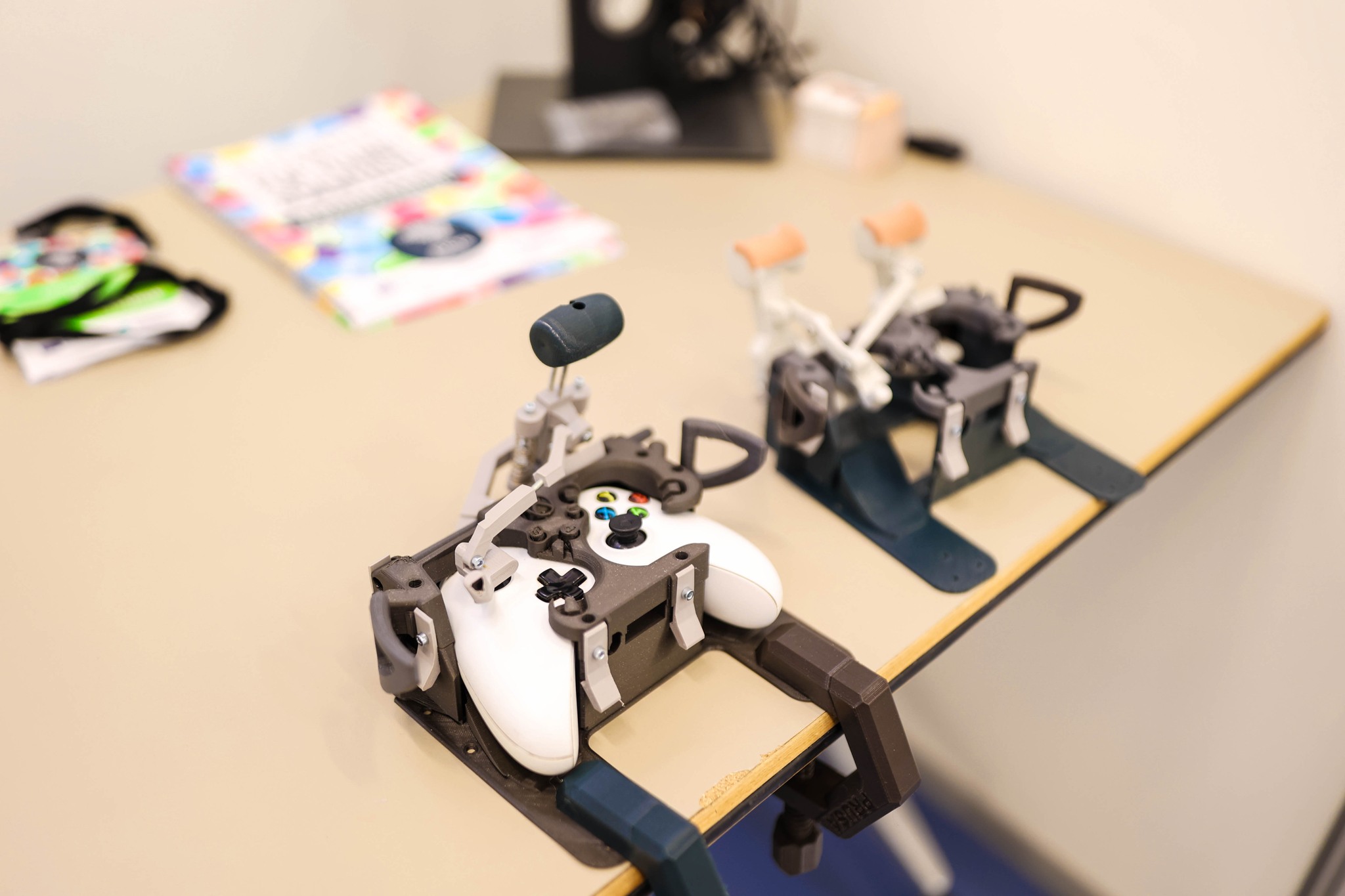
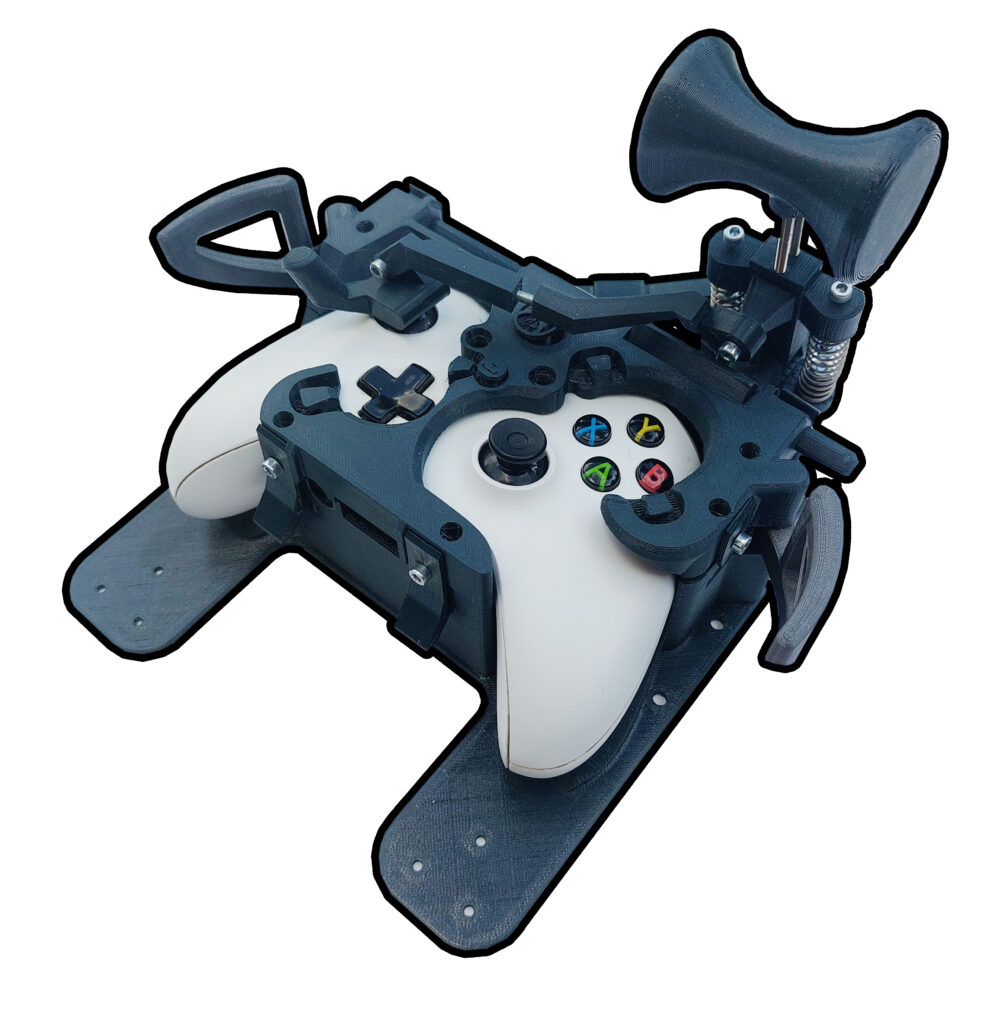
The current version of the add-on is a 3D printed shell that snaps onto a gaming controller and links together its function to make it usable for the racing game called Forza. By mechanically combining the functions of accelerating, reversing, and turning into one new pedal, all functions of Forza become usable with just one hand, not needing fingers.
Testing
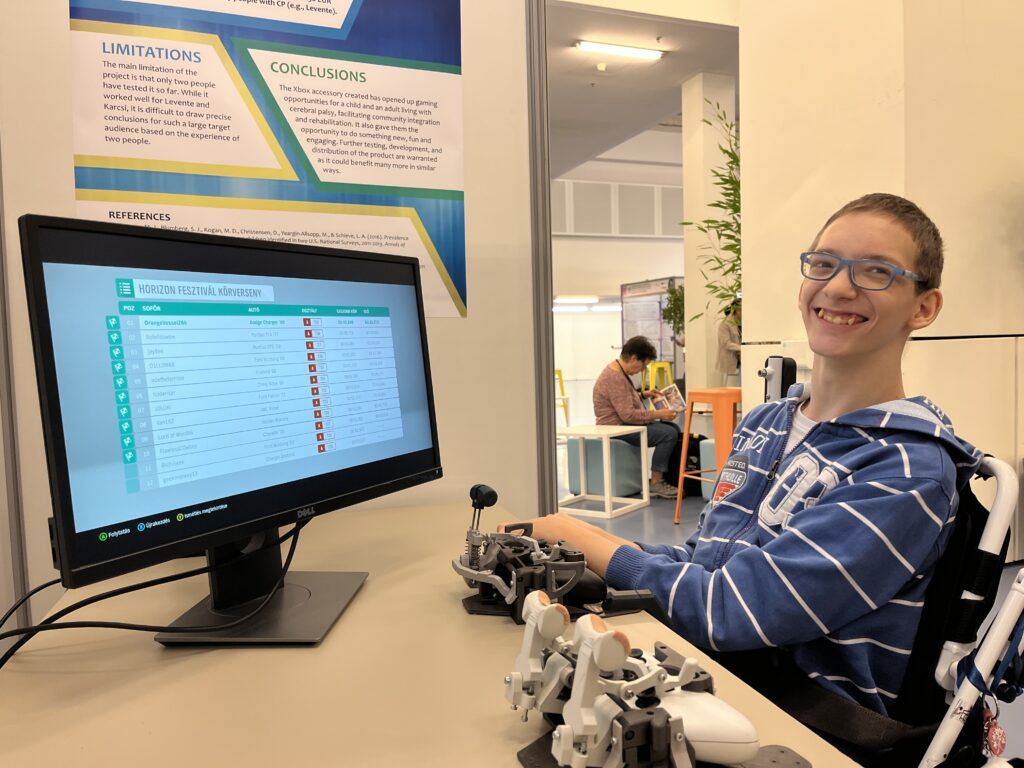
Testing was performed at the Peto Institute, which is Hungary’s largest center for cerebral rehabilitation. Testing was done with 5 individuals over the course of development.
2 videos taken while testing the add-on
Results
So far, 5 people with CP have tested the add-on. The first tester was Levente, a 16-year-old student at a CP rehabilitation institution who is only able to use one hand at a time with limited coordination. With the help of the accessory, Levente achieved first place for the first time in a Forza race. After several hours of testing, he provided feedback for minor improvements that have since been implemented. Using the add-on, the further testers were also able to play Forza without limitations.
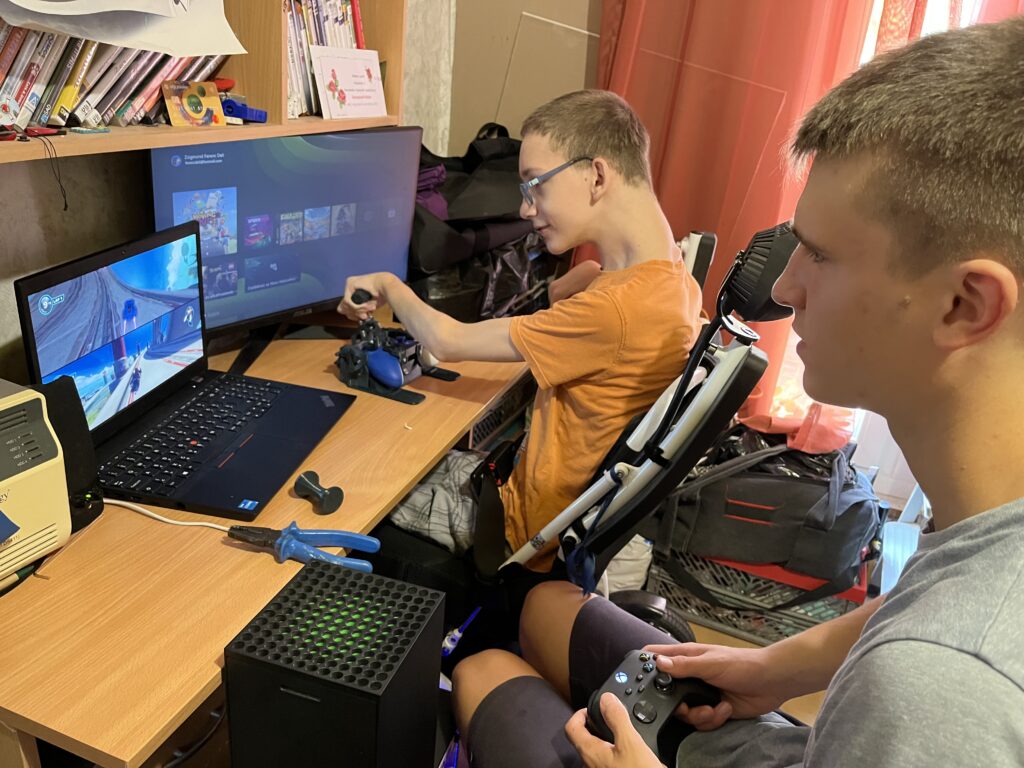
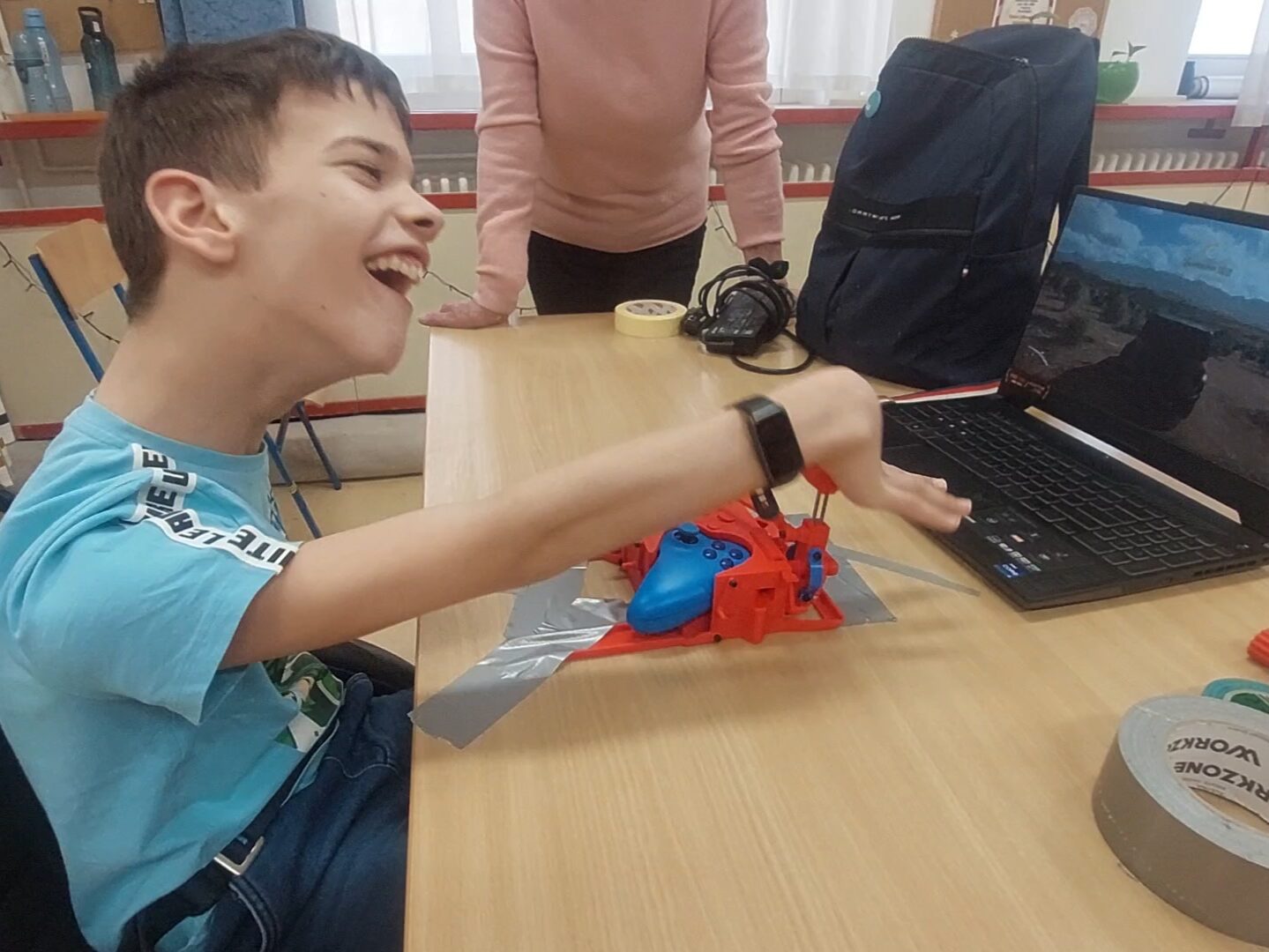
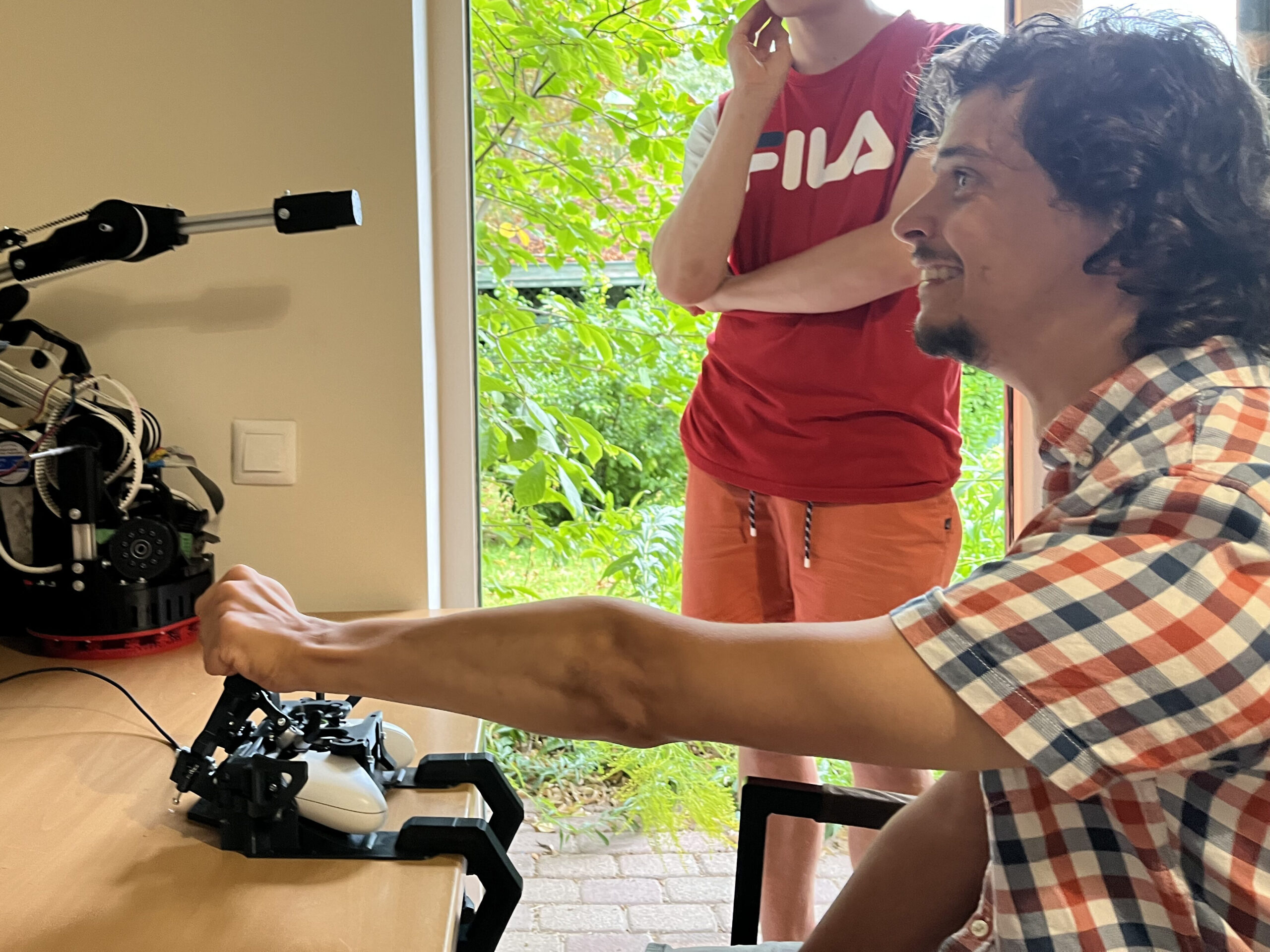
Figures 1, 2, 3: Pictures of testing the add-on
Conclusion
In sum, the project consists of an affordable and easily customizable 3D-printed adaptive gaming controller accessory, which allows children and adults with CP to participate in gaming. This accessory has the potential to reach a wide range of individuals and enable their engagement in gaming activities.