Designing For Flight
I joined Georgia Tech’s Design Build Fly team in the Micro class in August 2025, led composites and landing gear from that November, and have been Materials Lead and a competition pilot since August 2026. In March 2026 the team placed 2nd overall at SAE Aero Design East.
2nd overall at SAE Aero Design East 2026
Background
For a landing gear to be “good”, it has to fulfill several requirements. First and foremost, the landing gear must be sufficiently stiff to track straight, while also having enough flexibility (and ductility) to absorb shocks from landing and prevent damaging the sensitive balsa frame. If a crash does happen, the landing gear also has to act as a mechanical fuse so the rest of the airplane survives. The 2026 Micro rules also reward light aircraft in scoring, so every gram on the gear counts.
Most RC landing gear is bent aluminum. Aluminum is heavy and bends permanently on a hard landing, so I tested composite alternatives.
Methods
Through the fall 2025 semester I tested several materials and layups against those requirements. The gear I developed weighs half as much as the team’s previous optimized design. Along the way I set up composites workflows that improved the mechanical properties of our layups.
Results and flight work
At SAE Aero Design East in March 2026 the team placed 2nd overall, behind Texas A&M. We took 1st in flight score and 1st in the design report, and lost the overall win on the presentation. I was one of 12 members selected to travel.
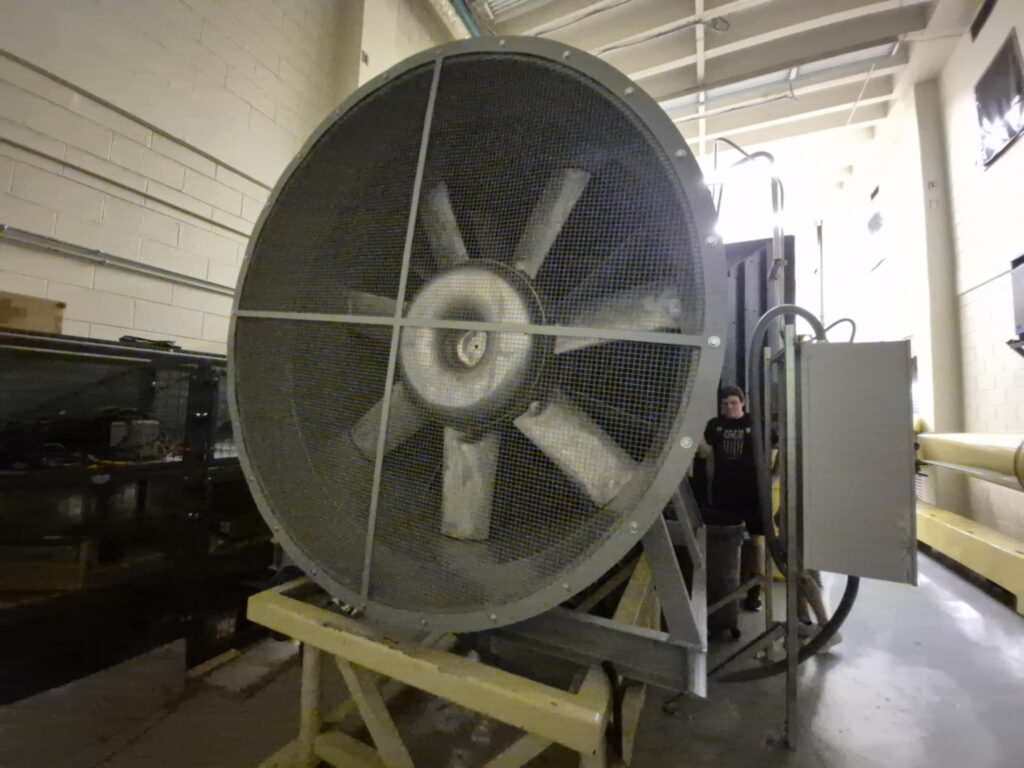
I also work with the design and CFD sub-teams on flight performance, using SolidWorks, Ansys Fluent, AVL, Vorstab and the wind tunnel, and have built four or more balsa aircraft for the team.